
The way businesses access and manage technology resources has fundamentally changed as a result of cloud computing. Rather than owning physical servers and data centers, businesses can now rent computing power, storage, and applications on demand over the internet. One of the most significant technological transformations of the modern era, this shift continues to accelerate as edge computing, artificial intelligence, and cloud infrastructure merge.
What Is Cloud Computing?
Cloud computing is the on-demand delivery of IT resources over a network, automating processes that traditionally required manual allocation by IT teams. This results in increased agility and cost savings. The term “cloud” reflects the representation of complex IT systems in diagrams. By abstracting complexity, cloud computing allows users to quickly access resources without needing to understand the intricacies of modern data centers.
How It Works
Cloud computing operates through key technologies including virtualization, cloud management software, and containerization. Virtualization uses hypervisors to create virtual instances of physical resources, enhancing efficiency and scalability. Cloud management software automates resource provisioning, managing hypervisors and handling user requests for virtual machines. Containerization packages applications with their dependencies, ensuring portability and consistency across environments, which is essential for modern deployment.
The Three Core Service Models
Cloud services are delivered through three primary models, each offering a different balance of control, flexibility, and simplicity:
Infrastructure as a Service (IaaS)
IaaS offers virtualized computing resources, including virtual machines, storage, and networking, via the internet, thus eliminating the costs associated with physical servers. Customers retain control over their operating systems and applications, while the provider manages the infrastructure. This model is particularly advantageous for hosting custom applications and large workloads. Common uses include hosting websites, securely storing backups, and managing networking resources like load balancers and VPNs.
Platform as a Service (PaaS)
PaaS offers a comprehensive cloud platform that includes hardware, software, and infrastructure for application development, deployment, and operation. Providers manage the necessary servers, networks, data storage, operating systems, databases, and development tools, allowing developers to focus on coding and data management. This approach simplifies application development and minimizes complexity. Typical applications include building apps with development frameworks, automating workflows with DevOps and CI/CD tools, and testing software projects in pre-configured environments.
Software as a Service (SaaS)
SaaS delivers fully functional software applications over the internet—no setup required. Updates, security, and all technical details are managed by providers; users simply log in and begin working. This is the simplest model, offering convenience and cost savings without the hassle of managing systems.
Common applications include using word processors, email, and video conferencing to collaborate, cloud-based CRM software for managing customer relationships, and business intelligence platforms for analyzing data.
Comparison of Models
| Aspect | Legacy Data Center | IaaS | PaaS | SaaS |
|---|---|---|---|---|
| Applications | You manage | You manage | You manage | Cloud provider |
| Data | You manage | You manage | You manage | Cloud provider |
| Runtime | You manage | You manage | Cloud provider | Cloud provider |
| Middleware | You manage | You manage | Cloud provider | Cloud provider |
| O/S | You manage | You manage | Cloud provider | Cloud provider |
| Virtualization | You manage | Cloud provider | Cloud provider | Cloud provider |
| Servers | You manage | Cloud provider | Cloud provider | Cloud provider |
Many organizations use a combination of all three models to balance flexibility, development speed, and ease of use.
Cloud Deployment Models
The way cloud resources are hosted and accessed defines the deployment model. Each caters to different organizational priorities.
Public Cloud
Public clouds are owned and operated by third-party providers who deliver computing resources over the internet. In a multitenant environment, resources are shared by multiple organizations, but each customer’s data and workloads are logically separated for privacy and security. Global scalability, high availability, and fully managed infrastructure are just a few of the advantages. Public clouds offer the most cost-efficient and flexible arrangement, letting businesses easily access massive scale.
Hosting websites with erratic traffic, developing and testing environments, big data and data analytics workloads, disaster recovery, and backup are examples of use cases.
Private Cloud
A private cloud is dedicated exclusively to a single organization. It can be hosted on-premises in the company’s own data center or off-site by a third-party provider. Unlike public clouds, private clouds operate in a single-tenant environment, isolating all computing resources.
Advantages include maximum control, predictable performance, and the ability to meet strict regulatory requirements. However, private clouds require significant investment in infrastructure and skilled personnel.
Use cases: Running sensitive workloads with strict compliance needs, hosting regulated data such as patient health records or financial transactions, maintaining control over data residency.
Hybrid Cloud
Hybrid clouds combine public and private cloud environments, allowing data and applications to move between them seamlessly. This flexible architecture supports sensitive workloads in a private cloud while using the public cloud for scalability, testing, or backup.
Advantages include scalable flexibility, optimized cost and performance, compliance-friendly scalability, and AI-driven orchestration. Hybrid cloud is one of the most popular trends, adopted by 82% of IT leaders according to recent industry reports.
Use cases: Seasonal businesses with fluctuating demand, enterprises adopting a phased cloud migration approach, organizations needing local data residency but global application reach, disaster recovery strategies.
Multi-Cloud
Multi-cloud refers to using services from multiple cloud providers simultaneously. This approach helps organizations avoid vendor lock-in while optimizing cost and performance. For example, a business might use AWS for compute-intensive workloads and Google Cloud for advanced AI tools.
Key Benefits of Cloud Computing
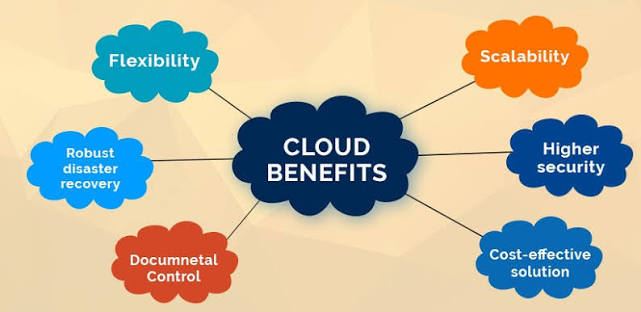
Increased Agility and Speed
In cloud computing, all resources are available on-demand. Users can get instant access whenever needed and terminate them when no longer required. In legacy IT infrastructure, resource provisioning takes days or even weeks due to manual processes. In cloud environments, it takes minutes—if not seconds.
This agility removes constraints from developers and accelerates time to market. Building a data center takes significant time, while public clouds provide immediate access to theoretically infinite resources.
Cost Savings
Cloud computing delivers long-term cost savings by replacing upfront capital expenditures with operational, pay-as-you-go models. Businesses avoid the expense and complexity of buying and managing physical servers and data center infrastructure.
Energy-efficient hardware in cloud environments helps lower operational costs and reduce environmental footprint. The pay-as-you-go pricing model means organizations only pay for what they use.
Optimal Resource Consumption
In traditional data centers, physical resources are owned by dedicated entities, leading to sub-optimal consumption. In the cloud, all resources are shared and distributed equally, preventing underutilization.
Business Continuity
Redundancy involves duplicating critical system components to ensure reliability and uptime. By maintaining backups and failover systems, redundancy supports disaster recovery and business continuity. Redundant systems in the cloud protect operations against hardware failures or regional disruptions.
Challenges and Considerations
Migration Costs and Complexity
While migration-as-a-service tools facilitate lift-and-shift migration, moving production workloads to the cloud can still be challenging. Organizations often need to re-design workloads in the long term to receive all the benefits of the cloud.
Security and Compliance
Security remains one of the foremost concerns in cloud adoption. The shared and distributed nature of cloud environments introduces vulnerabilities that require stringent measures. Organizations must prioritize encryption, multi-factor authentication, and regular security audits.
Compliance with regulations such as GDPR or HIPAA is critical to maintaining trust and avoiding legal repercussions. The shared responsibility model divides accountability between cloud provider and customer:
-
Providers secure the physical infrastructure, global networks, virtualization layers, and managed services
-
Organizations must safeguard their own workloads, applications, and data—including encryption, access control, secure coding, patching, and network configuration
Digital Sovereignty
Moving workloads and data to the cloud creates digital sovereignty risks. In some regions, local regulations may make public cloud adoption impossible. Organizations can build their own private cloud to regain control over privacy while benefiting from cloud advantages.
Cost Management
While the pay-as-you-go model is inherently flexible, unexpected resource consumption or inefficient usage can lead to escalating expenses. Achieving cost optimization requires adopting best practices, running cost-benefit analyses, and making data-driven decisions about workload placement.
The AI Revolution and Cloud Computing
Cloud computing has become the backbone of the artificial intelligence revolution. The convergence of AI and cloud creates unprecedented demand for computing power.
The Scale of Growth
Global cloud computing revenue reached $823 billion in 2025, with projections exceeding $1.6 trillion by 2029. The Chinese market alone grew to 1.07 trillion yuan in 2025, with expectations of reaching 2.5 trillion yuan by 2029.
Amazon Web Services, the leading cloud provider, reported $169 billion in annualized revenue in mid-2026, with 36.7% year-over-year growth—the highest in 18 quarters. AWS’s backlog of committed orders reached $496 billion, demonstrating the immense demand for cloud and AI infrastructure.
AI-Driven Cloud Demand
AI workloads are transforming cloud consumption patterns. Major AI labs like Anthropic and OpenAI have signed multi-year, multi-gigawatt compute commitments with cloud providers. The head of one major cloud provider stated that compute supply will remain insufficient through at least 2028, with capacity already locked in through that period.
The market structure is evolving toward multiple leading AI models rather than a single dominant solution. Industry leaders predict at least six top-tier foundation models will coexist within a few years.
Cloud-Edge Synergy
Cloud computing is extending to the edge—where data is generated and consumed. This convergence enables real-time insights, automation of critical operations, and new service models across manufacturing, healthcare, retail, energy, and logistics.
Examples include:
-
Smart factories using edge computing for real-time equipment monitoring while the cloud optimizes supply chains
-
Connected retail with store sensors detecting foot traffic and cloud systems forecasting demand
-
Healthcare monitoring where wearables provide real-time vitals analysis and cloud platforms enable large-scale research
The Future of Cloud Computing
The cloud computing industry is evolving toward “ubiquitous connectivity, affordable ease of use, intensive efficiency, security and compliance, and open collaboration”. Key trends include:
Public Cloud as the Primary Model
Cloud services are transitioning from “resource delivery” to “service delivery” as the fundamental model. This transformation makes cloud services more accessible and integrated.
Intelligent Cloud as Service Hub
Cloud platforms are evolving into “intelligent service hubs” that seamlessly integrate AI capabilities. This includes prebuilt AI models, APIs, custom training environments, and generative AI capabilities.
Global Expansion
Cloud providers are expanding globally, with particular emphasis on the Asia-Pacific region as a growth engine. Chinese cloud providers, in particular, are establishing regional footprints with Asia-Pacific as the core, the Middle East as a new growth pole, and Europe, the Americas, Latin America, and Africa as complementary markets.
Edge Computing Integration
The future of B2B innovation lies in combining cloud intelligence with edge responsiveness. This distributed paradigm enables organizations to use both cloud and edge power, creating new value ecosystems across autonomous production lines, real-time patient care, and connected logistics.
Decentralized Cloud Architectures
Decentralized cloud computing represents an emerging paradigm shift, offering networks of interconnected nodes that deliver cloud services without relying on a single service provider. This approach enhances data sovereignty and reduces vendor lock-in.
Benefits include enhanced resilience through geographic distribution, improved security through distributed data storage, and cost efficiencies through resource optimization.
Challenges include ensuring data consistency across distributed systems, managing latency, and navigating complex regulatory compliance.
Conclusion
Cloud computing has become the foundational technology powering digital transformation across every industry. Its ability to deliver scalable, cost-effective IT resources on demand has democratized access to computing power that was once available only to the largest organizations.
As AI continues to reshape the technology landscape, cloud computing serves as the essential infrastructure for training and deploying intelligent systems. The combination of cloud and edge computing promises to enable new applications that were previously impossible, from autonomous factories to real-time healthcare monitoring.
Organizations that understand the cloud service models, deployment options, and emerging trends will be best positioned to leverage this transformative technology. Whether through public cloud, private cloud, hybrid cloud, or multi-cloud architectures, the cloud offers a path to greater agility, innovation, and competitive advantage in an increasingly digital world.